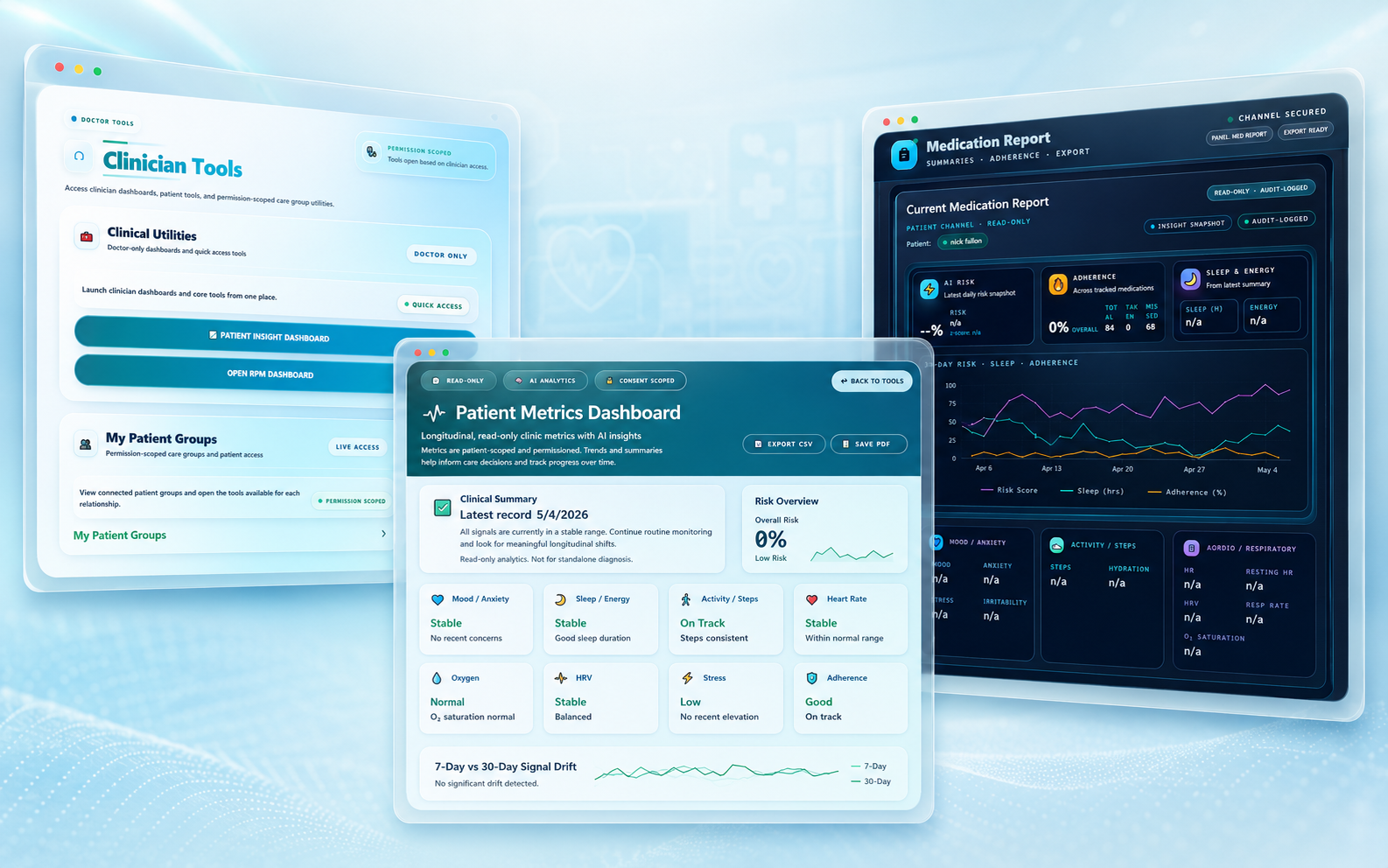
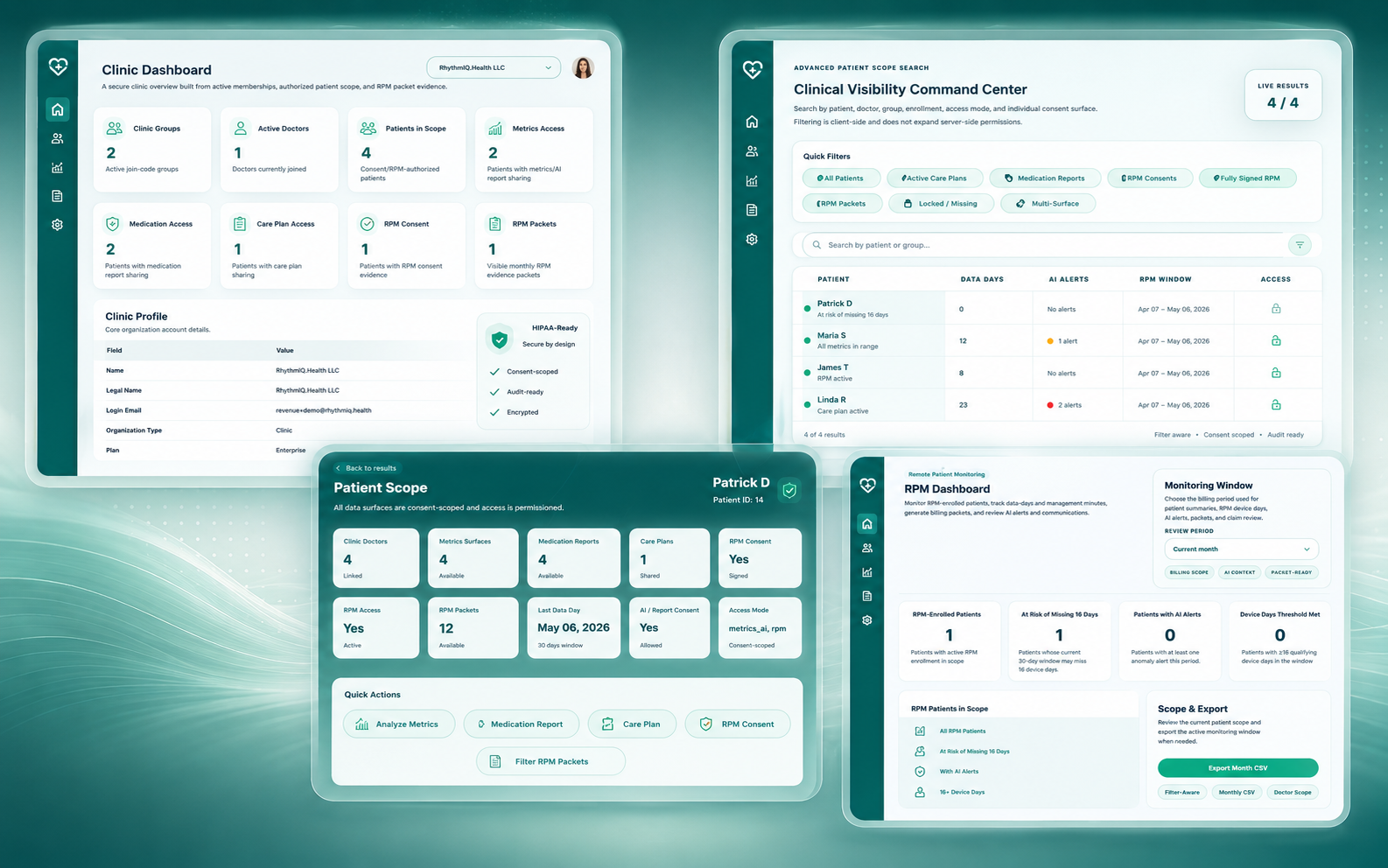
Changes in blood oxygen saturation and breathing patterns can provide supportive wellness context when reviewed with sleep, activity, symptoms, and licensed clinician guidance.
Can provide supportive context around recovery, stress load, sleep, activity, medication changes, and general physiology. Trends should be reviewed with other logs and clinician judgment.
Sleep timing, duration, and fragmented sleep patterns can help users and care teams review routine changes over time. These patterns are supportive context for clinician-guided conversations.
Opt-in camera check-ins can help organize visual-signal quality context such as lighting, frame clarity, and face visibility. These features support care conversations and do not diagnose emotion or replace clinical review.
Shifts in communication patterns, such as timing, frequency, and response rhythm, can provide social-routine context when users opt in. These summaries support conversations and do not diagnose distress.
Routine and medication tracking can help users organize reminders, adherence, missed check-ins, and day-to-day rhythm changes. These patterns may support care-team review without replacing clinical judgment.
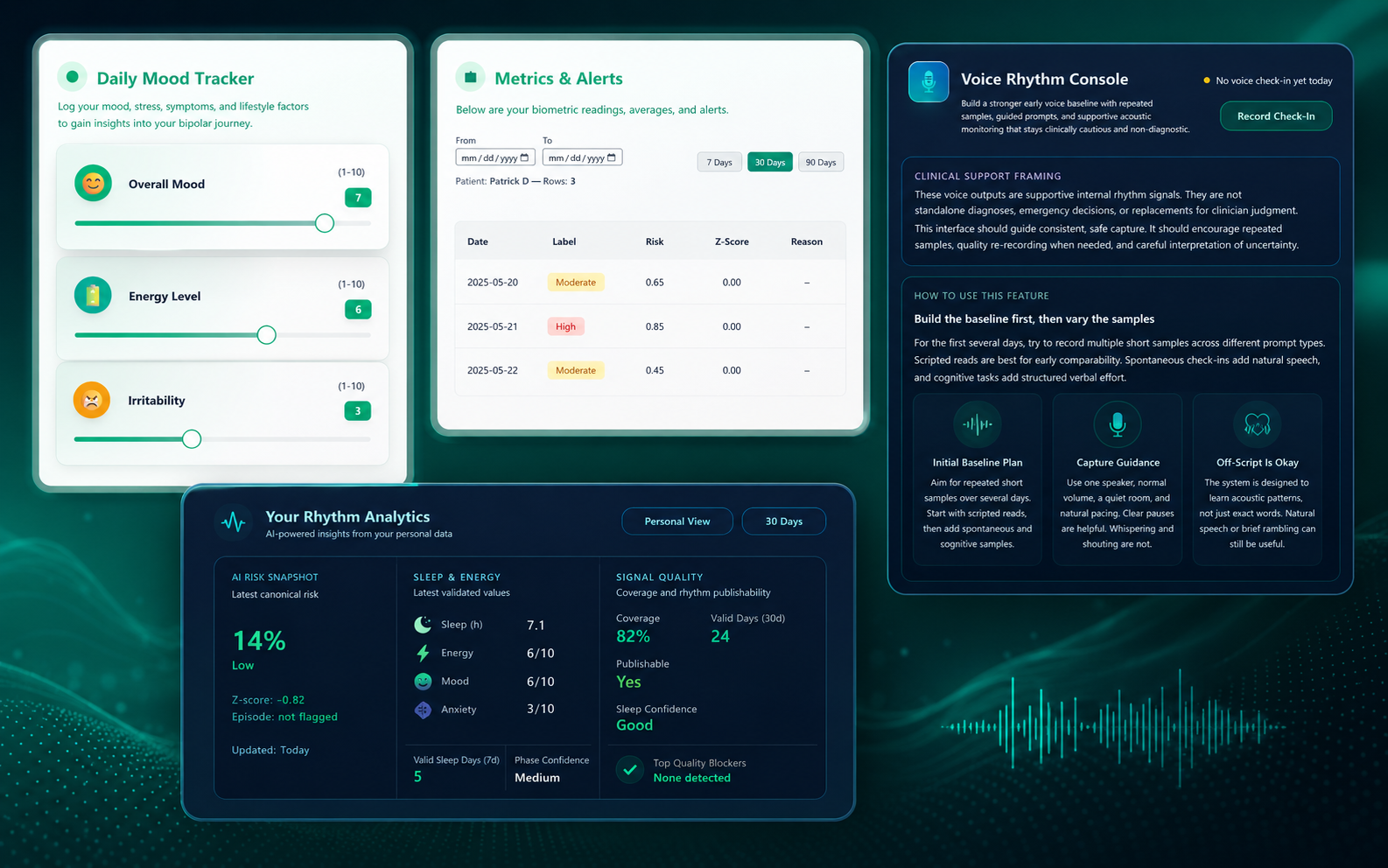
Start using the RhythmIQ.Health mobile app to track biometrics, mood patterns, and daily routines that may be relevant for bipolar disorder, cyclothymia, schizophrenia, psychosis, anxiety, and depression. Signing up takes only a minute, and if you have questions about features, privacy, or telehealth integration, our support team is ready to help.
RhythmIQ.Health Education
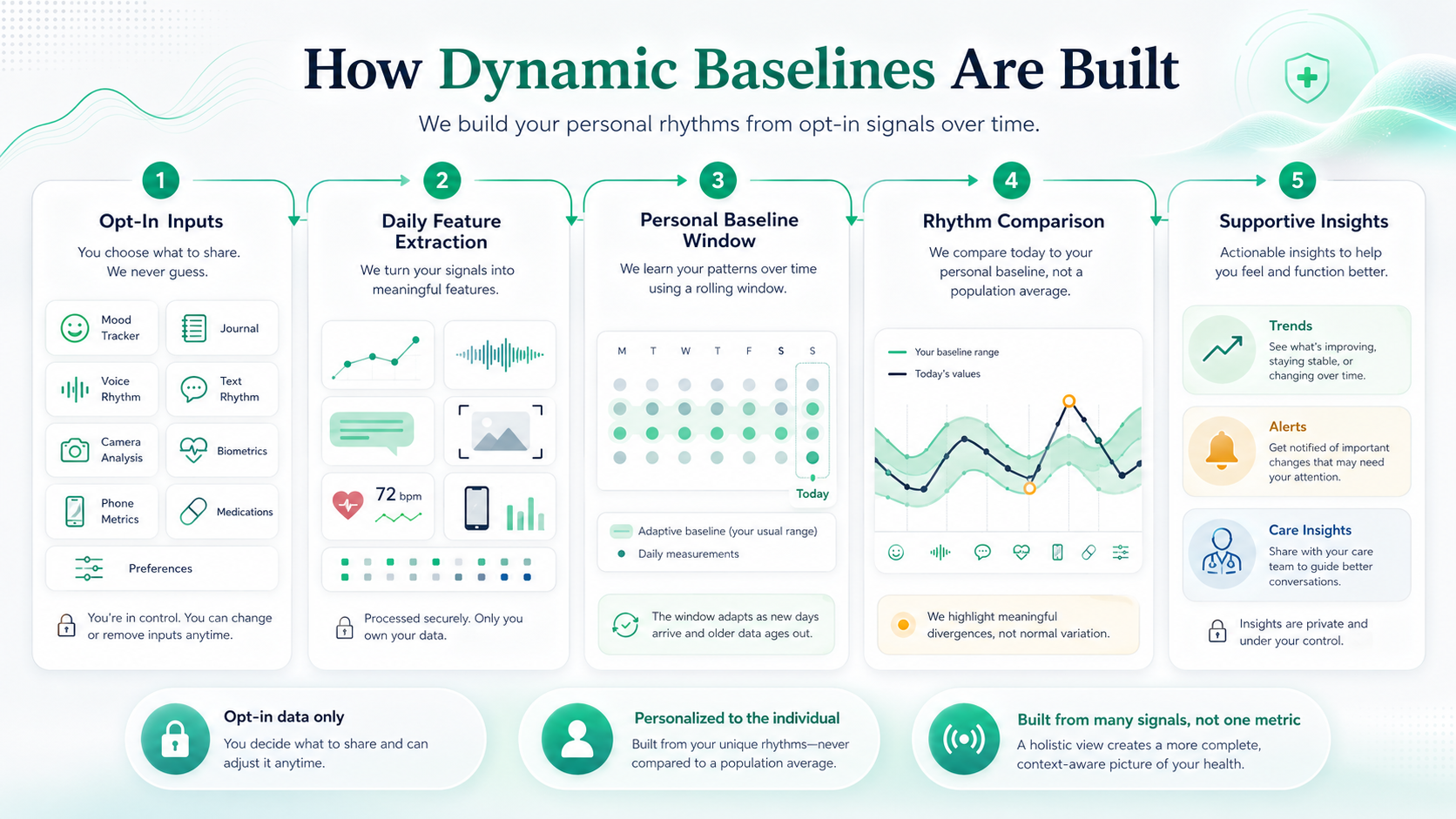
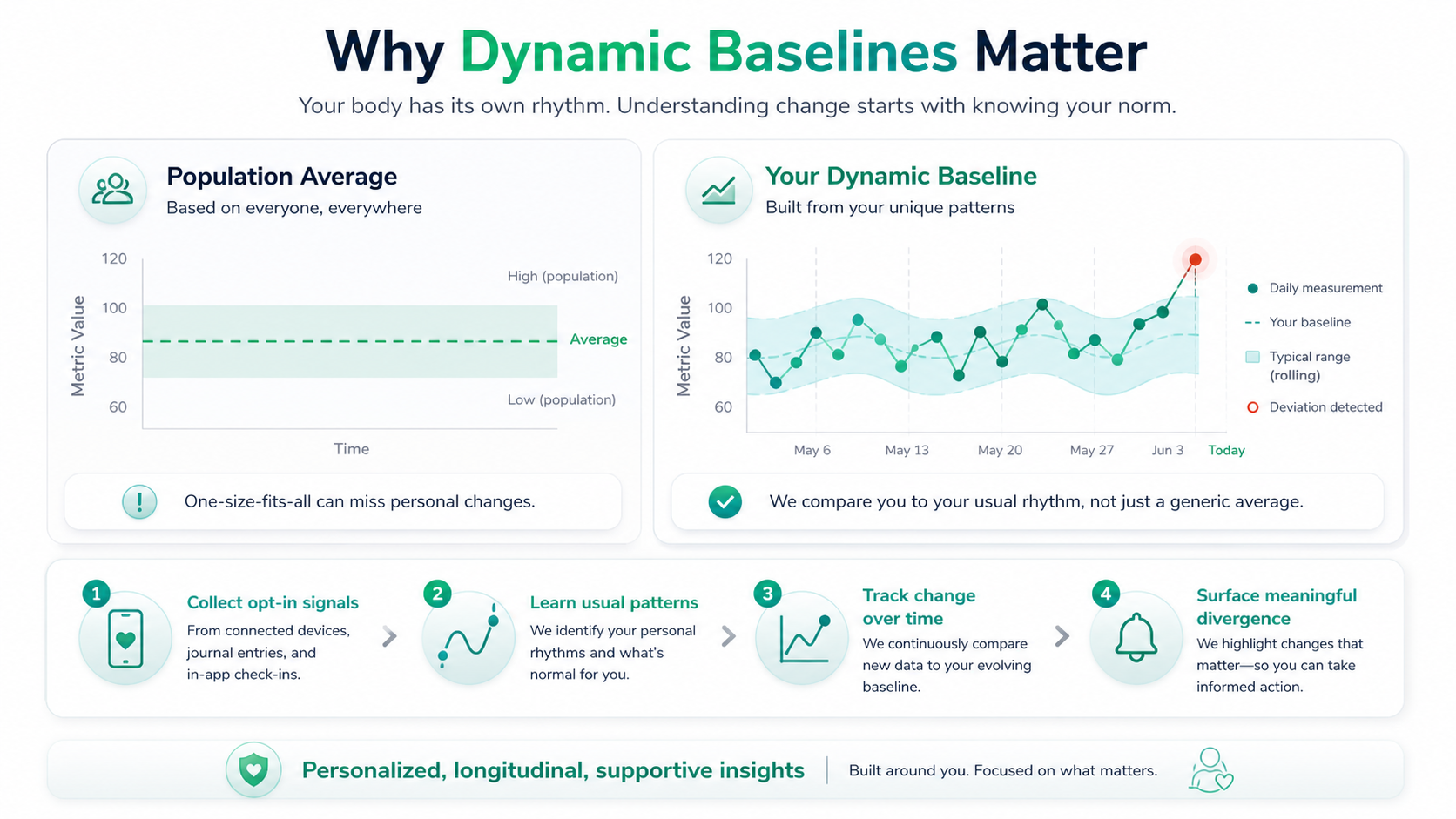
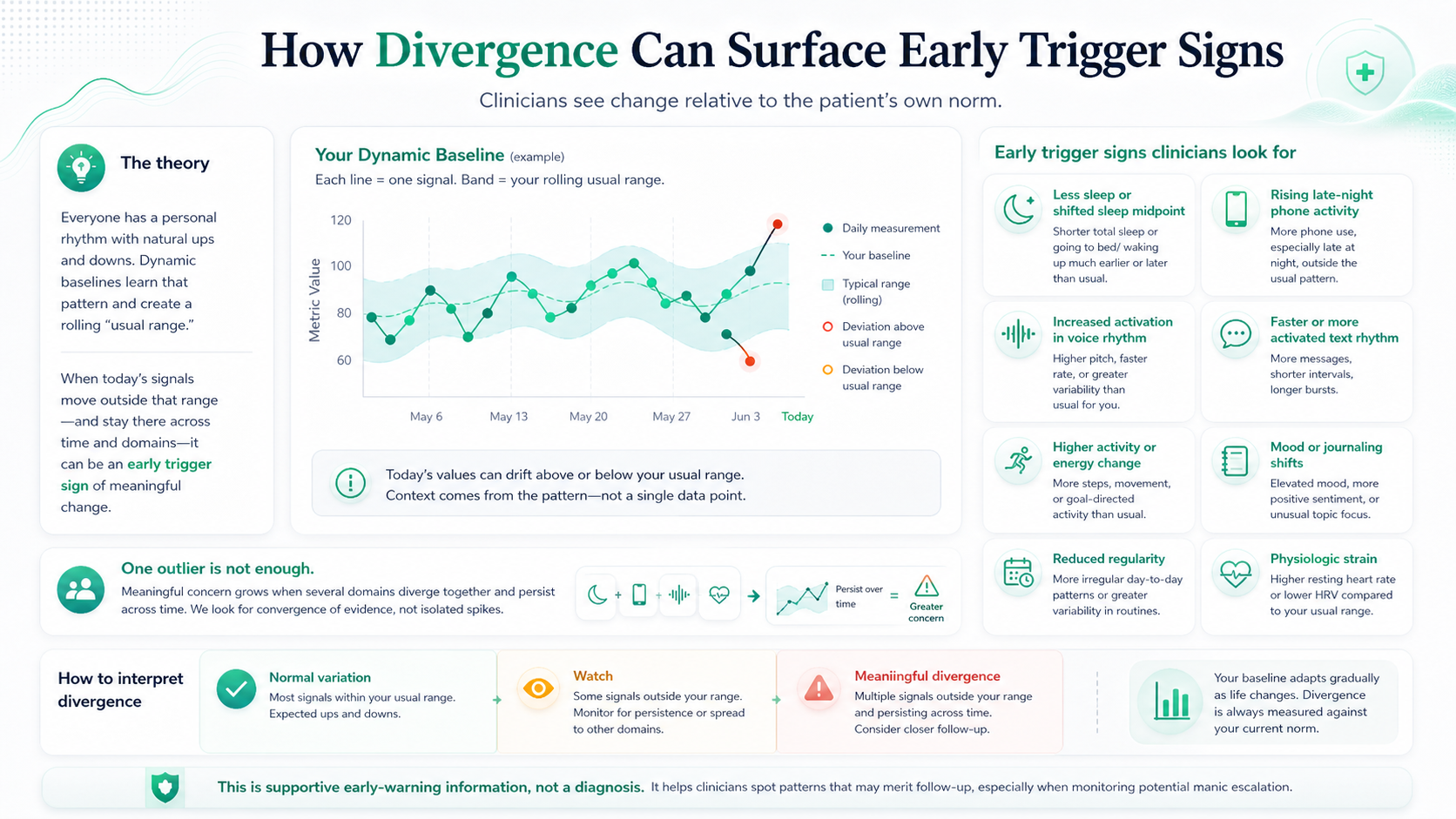
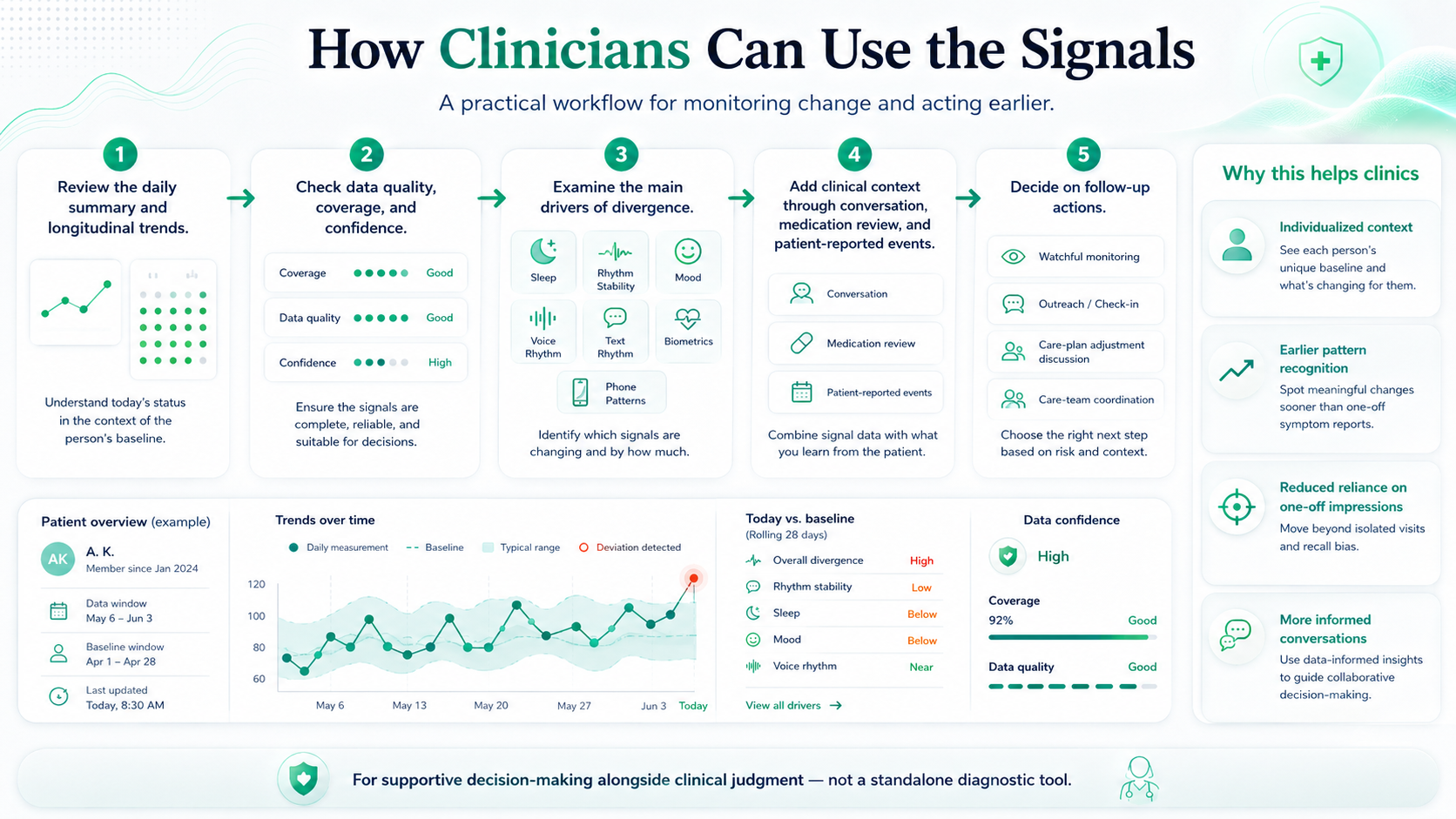
A visual walkthrough of how opt-in signals, quality checks, rolling rhythm windows, and supportive clinical context work together to help care teams understand meaningful change over time.
Account profiles · Shared insight · Permission scoped
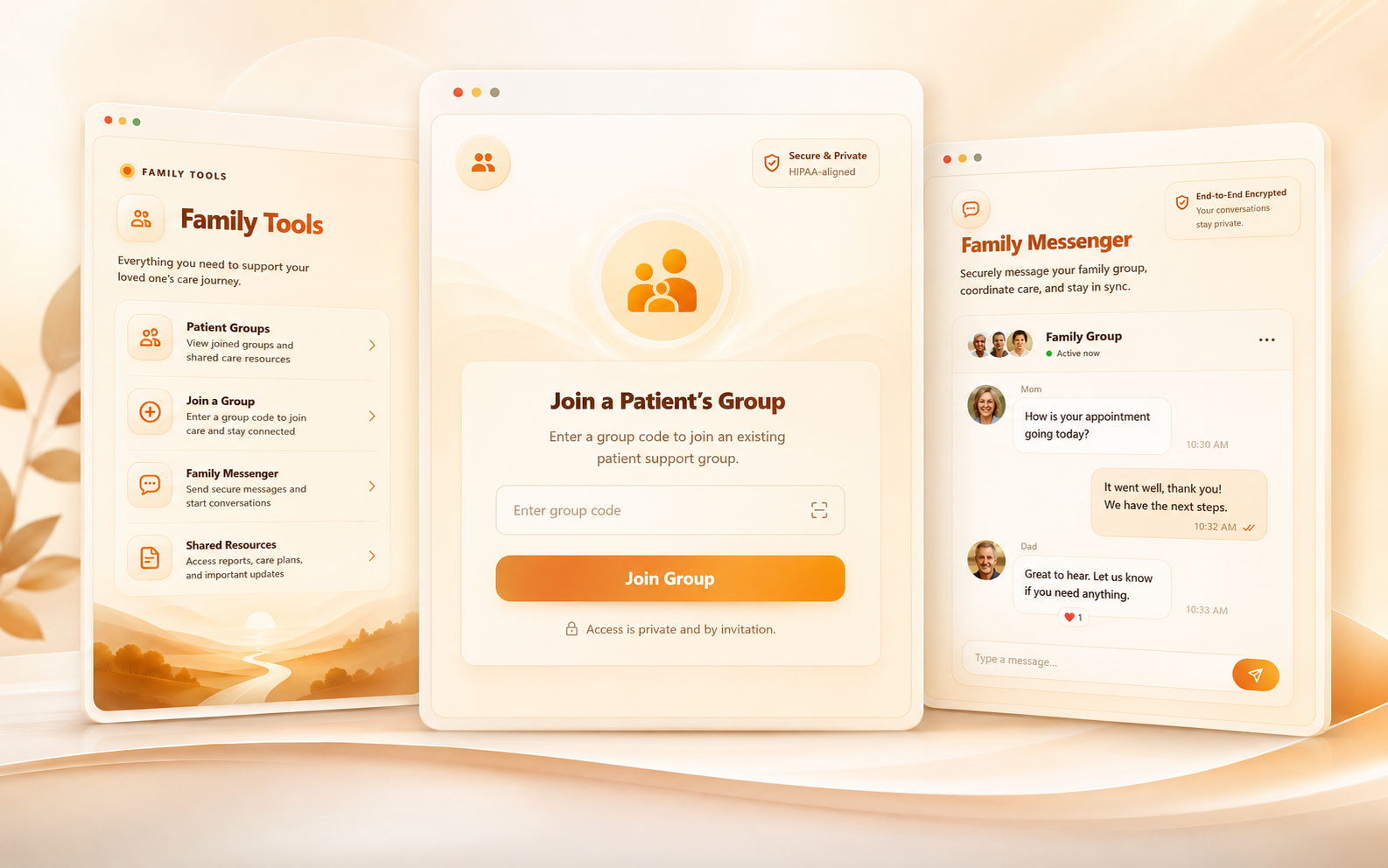
RhythmIQ.Health brings patients, family supporters, clinicians, and clinics into a clearer workflow. Each profile is designed around the same principle: surface useful context, respect consent, and support better conversations without replacing clinical judgment.
For patients
Patients can use guided check-ins, mood tracking, journal entries, voice rhythm, text rhythm, camera-supported signals, biometrics, phone patterns, and medication context to build a more complete picture of daily life. The goal is not to label a person from a single data point, but to help them notice changes relative to their own usual baseline.
Personal baseline
Signals are organized around the patient’s own repeated patterns.
Daily reflection
Mood, journal, and guided entries add context to passive signals.
RhythmIQ.Health is designed as supportive care-coordination software. Educational profile views should frame insights as context for patients, families, clinicians, and clinics — not as standalone diagnosis, treatment, emergency decision-making, or replacement for licensed clinical judgment.